Music Beat Night Show
- 4.5
- Rating
- 1.00M
- Installs
- Free
- Price
 Analysis by App-foxy
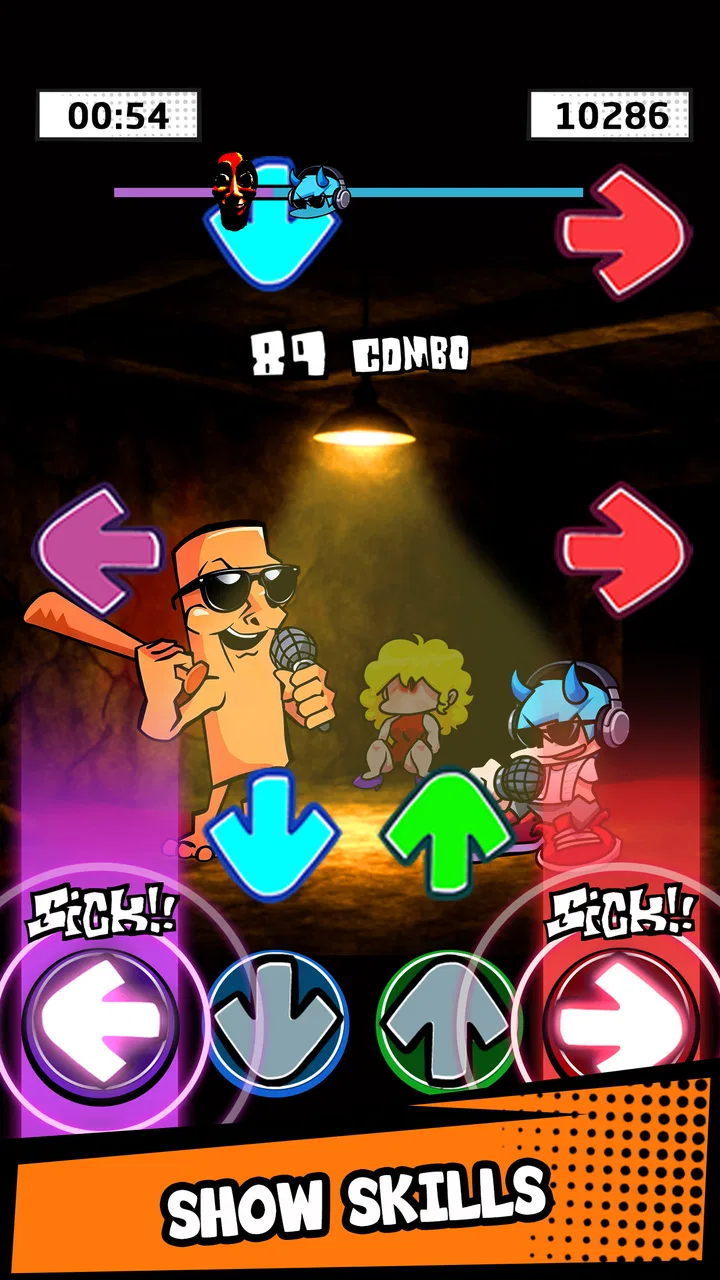
I tried Music Beat Night Show as a quick rhythm game for shared-device use, and its appeal became clear almost immediately: it turns short bursts of music into battles where timing matters more than complicated planning. The idea is simple enough for someone to understand after watching one round, yet active enough to make a spare few minutes feel like a small event. I would describe it as a music-focused game rather than a serious rhythm-training tool, with a bright, fast-moving style aimed at casual play.
The game is developed by HOLA GAME and is free to download. It sits in the music category, carries an Everyone age rating, and has reached over one million installs. Its average rating is 4.3 from around seven thousand ratings, which suggests that the straightforward beat-and-battle formula has found a sizeable audience. I can see why: there is very little learning overhead, and the basic promise is easy to understand without reading a long tutorial.
What makes it useful in an ordinary household is the low commitment. One person can pick up the phone, play for a short while, and hand it back without needing a long campaign session. That makes it a reasonable choice for a shared tablet or family phone, especially when different people want something musical but do not necessarily want the same level of challenge. The best way to approach it is as a quick, accessible rhythm diversion, not as a deep music game with endless customization.
You May Also Like

 Blood Strike: 2.5 Anniversary
Blood Strike’s Loadouts Turn Every Drop Into a Tactical Gamble
A close look at Blood Strike’s custom loadouts: how fast access to signature weapons reshapes its battle royale rhythm, rewards preparation, and narrows the gap between fights.

 Pandora - Music & Podcasts
Pandora’s Music Is Easy to Start, but Harder to Recover
Pandora’s strength is its low-effort path from a seed to a station. Its weak spot is how much confidence it asks you to place in connection, setup, and quiet recovery.

 8 Ball Pool
 Is Built on Rivalries, Rematches, and Routine
A close look at the rivalries, rematches, shared routines, and unanswered safety questions that turn a quick pool match into a persistent mobile community.

 Samsung Music
’s Quiet Strength Is Playing What You Already Own
Its reach comes less from spectacle than from dependable access to a personal library. That simplicity is both the app’s strongest retention engine and its ceiling.

 AccuWeather: Weather Radar
AccuWeather Review: A Quick, Clear Forecast for Everyday Decisions
For everyday plans, the best forecast is the one you can understand quickly. AccuWeather makes rain timing, radar, and local conditions easy to act on, with a few trade-offs.

 Hill Climb Racing
Why Hill Climb Racing Still Turns Crashes Into One More Run
A tiny car, a bumpy hill and one more upgrade: Hill Climb Racing keeps resurfacing because its simple chaos makes every near-miss feel personal.
More From Our News Desk
View All News


How it works in a shared-device setting
In my experience, the game works best when the device is treated like a small turn-taking activity. One player can attempt a battle while another watches, then they can swap without needing to explain a complicated control scheme. The visual connection between the music and the on-screen action gives spectators something to follow, even when they are not holding the phone.
That shared-use quality is more important than it may sound. Many music games are enjoyable alone but awkward when someone else is waiting, because each session demands concentration or takes too long to finish. Music Beat Night Show is better suited to a living-room pause, a short wait, or a casual challenge between people who are already together. I would not present it as a full group party game, since the experience still centers on the person playing, but it can create a natural “your turn, my turn” rhythm.
A practical scenario would be a family sharing one Android device after dinner. A younger player may focus on the colorful action and the satisfaction of landing beats, while an older player may treat the same round as a timing challenge. Neither person needs to install a separate companion app or learn a complicated interface before trying it. That simplicity reduces the friction that often stops shared-device games from being used more than once.
There is also a useful social trade-off. Because the game is built around music and battles, a player who enjoys performing well may want to replay a section immediately, while someone waiting may prefer a strict turn limit. I recommend agreeing on a simple rule before starting, such as one attempt each or a short rotation. That is not a feature of the game; it is a household habit that keeps the experience friendly when several people are sharing one screen.
What to settle before handing over the phone
Shared devices need clear boundaries, and this game does not remove that responsibility. Before giving it to a child or another household member, I would check which account is active on the device and make sure the person playing understands that optional purchases can be made. The game is free, but in-app items range from less than a dollar to a few dollars each. That is a small amount per item, yet repeated taps can still become an unwanted expense.
This is one of the less obvious points about casual games: “free” describes the entry price, not necessarily every action that follows. If the device belongs to several people, I would avoid leaving a payment method available without supervision. A child may interpret a bright button as part of the game rather than as a purchase step, while an adult may tap quickly during a busy moment. Keeping the account boundary clear is more useful than assuming everyone will notice the same prompts.
I also recommend giving each player a moment to adjust the phone’s volume before beginning. Music is central to the experience, but a level that feels exciting to one person may be irritating to someone nearby. Headphones can solve that in individual play, although they make the game less social because observers lose the audio cue. On a shared tablet, moderate volume is usually the better compromise.
The Android requirements are relatively approachable: the current version is 1.3.0 and it works from Android 7.0 onward. That makes it suitable for many older devices still used around a home, although actual comfort will depend on the phone’s screen, speakers, and general condition. A smaller display may make timing feel less comfortable, while a device with delayed audio or touch response can make a rhythm game feel unfair. If a round seems strangely difficult, I would first test the device rather than immediately blaming the player.
Coordinating turns without making the game feel like homework
The most effective coordination method is to keep expectations modest. I would not use this as a formal competition where every missed beat becomes an argument. The game is more enjoyable when players compare reactions, celebrate a good sequence, and then move on. A quick “best attempt” format works well because it rewards concentration without turning a casual session into a long contest.
For mixed ages, it helps to let the less experienced player go first. That gives them a chance to understand the pace without watching someone else perform perfectly beforehand. It also prevents the first player from feeling that the game is only for people with quick reflexes. After one round, the household can decide whether to repeat, switch players, or stop while the experience is still fresh.
Another useful approach is to separate practice from performance. If someone is struggling, I would let them replay without commentary rather than having another player call out every mistake. Rhythm games depend on concentration, and too much coaching can make the timing worse. A better form of coordination is to point out one practical adjustment at a time, such as watching the incoming cues more closely or holding the device still.
This also reveals a limitation. The game’s immediate appeal may encourage repeated attempts, but that does not automatically create a satisfying long-term routine for everyone. Some players enjoy improving a pattern; others lose interest once the novelty of the battle presentation fades. In a household, it is therefore better as one option in a shared-device rotation than as the only game available.
Age context and trust
The Everyone rating makes the game approachable for a broad audience, and the music-battle concept is easy for younger players to grasp. Still, an age label should not replace ordinary supervision. The important household questions are practical: who is using the device, which account is signed in, whether purchases are possible, and whether the volume is appropriate for the room.
I would be comfortable introducing it to a child in a shared setting where an adult is nearby, especially for short sessions. I would be more cautious about leaving a young player alone with a payment-enabled device, not because the game’s basic concept is difficult, but because casual games often make optional spending feel like a natural continuation of play. The safest arrangement is transparent: explain that the game costs nothing to start, but some items may cost money and require permission.
Trust also includes respecting the device itself. Rhythm play encourages tapping, and an excited player may grip the phone tightly or tap harder than necessary. A sturdy case and a clear place to play are sensible household precautions. I would avoid using it near food or drinks, particularly with younger children, because the game’s fast action can make a player less aware of what is around them.
For older players, the main age-related question is not suitability but depth. Someone looking for complex musical arrangements, detailed song practice, or a serious performance system may find this too light. A dedicated rhythm title with a larger music library or more precise training tools would be a better choice for that audience. Music Beat Night Show is strongest when the goal is immediate entertainment rather than technical study.
Where it fits beside other music games
Compared with a traditional music player, this game adds interaction and a sense of opposition. You are not simply listening to a track; you are responding to its rhythm while the battle presentation gives your timing a visible consequence. That makes it more engaging for someone who wants to do something with music rather than leave it playing in the background.
Compared with a demanding rhythm game, however, it is easier to approach and less likely to satisfy a player who wants meticulous scoring, deep progression, or a large set of advanced options. Its accessible design is a strength for shared use, but the same simplicity can feel limiting to experienced players. I would choose it over a more technical alternative when several people with different skill levels need to start quickly. I would choose the technical alternative when personal improvement and precision are the main goals.
It also differs from ordinary action games because the music is not just decoration. The beat gives the session its identity, and the battle framing makes timing feel connected to the outcome. That combination is useful for players who enjoy a little drama but do not want a large story or a complicated world to learn. The trade-off is that anyone who dislikes rhythm-based input may find the central mechanic repetitive rather than exciting.
One tip I found valuable is to judge the game after several short sessions rather than one long first impression. The initial visual energy can be appealing, but the real question is whether the timing interaction remains enjoyable once the surprise wears off. In a shared home, this test is easy: let different players try it on separate occasions and see whether they return voluntarily. That tells you more than a single enthusiastic round.
Small habits that improve the experience
First, play on the device that gives the clearest audio and most reliable touch response, not necessarily the newest device in the house. Rhythm games expose small delays more clearly than many other genres. If the game feels out of sync, try a different device before deciding that the controls are the problem.
Second, keep the screen clean and hold the phone securely. Fingerprints, a loose grip, or accidental touches from another person can turn a manageable sequence into a frustrating one. This matters especially when a parent and child are sharing the device and the adult is tempted to guide the child’s hands during play. It is usually better to let the player control the phone independently.
Third, use short rounds as a natural stopping point. A music game can encourage “one more try,” particularly after a near miss. In a household, agreeing that the next attempt is the last one prevents the session from expanding into an argument over screen time. The rule works for adults too; the game’s quick format makes it easy to underestimate how long repeated attempts have taken.
Finally, treat purchases as a separate decision from gameplay. I would not buy anything simply because a player is frustrated after missing a battle. Optional spending should be discussed away from the pressure of the round, with the account holder making the final choice. This keeps the game’s free entry point genuinely useful for families testing whether the format suits them.
Who should install it, and who should skip it
I would recommend it to someone who wants a free music game that can be understood quickly, especially if the same Android device is used by several people. It is a good fit for casual players, younger users playing with an adult nearby, and anyone who enjoys the energy of a beat-based battle without committing to a lengthy game.
I would also suggest it for households that need a compact entertainment option rather than a major daily hobby. A short session can fill a waiting period or provide a simple turn-taking activity. The fact that it supports an Everyone rating makes the introduction easier, while the modest entry cost removes the need to decide on a purchase before trying the core experience.
I would skip it if your priority is a broad, carefully curated music collection, serious rhythm practice, or a highly competitive scoring environment. I would also look elsewhere if you dislike repeated timing challenges or prefer games that can be played silently. The music is central enough that muting the device changes the character of the experience, even if the basic action remains possible.
Players who expect every free game to be completely free of optional spending should also think carefully about the account setup. The in-app purchase range is clear enough to manage, but management still requires attention. That is not a deal-breaker for me; it is simply part of deciding whether the game belongs on a shared device or on one person’s private phone.
My household verdict
After using it as a casual rhythm game, I see Music Beat Night Show as a lively, approachable choice for short sessions and informal turn-taking. Its strongest quality is not complexity but accessibility: people can understand the musical battle idea quickly, and the game can fit into a shared-device routine without demanding a large time investment.
The developer, HOLA GAME, has positioned it as a free experience, with optional items priced from $0.99 to $2.99 each. That makes trying it straightforward, but I would establish purchase rules before handing over the device. The Everyone rating helps with age suitability, while the Android 7.0 minimum means it can reach users with older phones. Those practical details make it easier to consider for a household, provided the device performs well enough for accurate timing.
My final recommendation is conditional but positive. Install it if you want quick musical battles, a game that can entertain different ages in the same room, and an experience that does not require a long explanation. Keep expectations realistic about depth, supervise spending on shared accounts, and use short turn-based sessions rather than treating it as a serious competitive platform. With those boundaries, it is an enjoyable little addition to a family or shared-device game rotation.
FAQs for Music Beat Night Show
01What is Music Beat Night Show and how does it work?
Music Beat Night Show is an interactive rhythm game designed for both Android and iOS platforms. The game combines vibrant visuals with a dynamic soundtrack that players must tap along to. Players follow the beat of the music, hitting notes as they appear on the screen to score points and progress through increasingly challenging levels.
02Is Music Beat Night Show free to download and play?
Yes, Music Beat Night Show is free to download and play. However, it offers in-app purchases that allow players to unlock additional features, songs, and customization options. While the core experience is accessible without spending money, these purchases can enhance the gameplay experience for those interested.
03What are the device requirements for Music Beat Night Show?
For optimal performance, Music Beat Night Show requires Android devices running version 5.0 or higher and iOS devices running iOS 12.0 or later. The game is designed to run smoothly on most mid-range and high-end smartphones and tablets, but older devices may experience some lag or performance issues.
04Are there any social features in Music Beat Night Show?
Yes, Music Beat Night Show includes social features that allow players to connect with friends, share scores, and compete on leaderboards. Players can also form groups or join events to collaborate and challenge other players, enhancing the community aspect of the game.
05How frequently is new content added to Music Beat Night Show?
The developers of Music Beat Night Show regularly update the game with new content, including songs, themes, and challenges. This ensures that the gameplay remains fresh and engaging for players. Updates are typically released every few weeks, with major updates bringing significant new features and improvements.
Pros
- Intuitive interface for easy navigation.
- Wide variety of music genres available.
- Customizable themes for personalization.
- Offline mode to enjoy without internet.
- Regular updates with new features.
Cons
- Some features are locked behind paywall.
- Ads can be intrusive during gameplay.
- Limited free tracks available initially.
- Occasional lag on older devices.
- In-app purchases can be expensive.

Music Beat Night Show
Gallery